

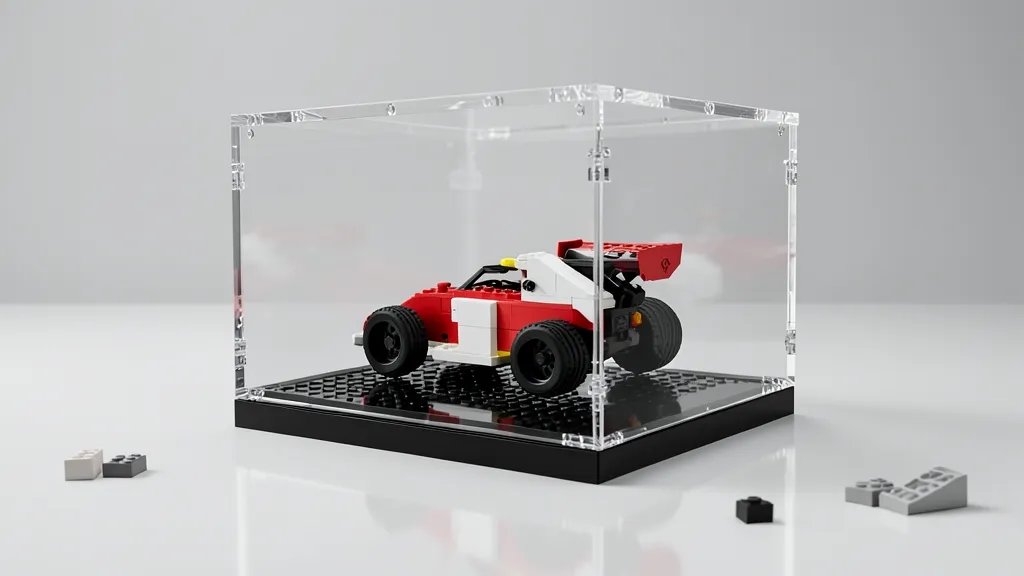
Why Your 75639 Collectible Deserves More Than a Shelf
You've made the investment, unboxed the masterpiece, and admired every detail of your 75639 collectible. Now comes the question that separates casual owners from serious collectors: how do you protect and present it? A dedicated 75639 display case isn't just a piece of furniture—it's a preservation tool, a statement piece, and an insurance policy rolled into one. In Hong Kong's notoriously humid climate, where relative humidity routinely climbs above 80% during the summer months, unprotected collectibles face constant threats from moisture, dust, and UV exposure. According to the Hong Kong Observatory, the city experiences an average of 2,200 hours of sunshine annually, and UV radiation can cause irreversible fading and material degradation within months for certain plastics and paints.
Beyond protection, a display case transforms how your 75639 is experienced. It elevates the piece from a stored object to a curated exhibit, giving it the visual breathing room it deserves. Whether your 75639 is a limited-edition figure, a die-cast model, or a complex construction set, the right case balances visibility with security. Many collectors who also own a 21351 display case will tell you the same thing: once you've seen a collectible properly housed, you can never go back to dusty open shelving. And if you're managing a growing collection that includes a 75419 display case alongside your 75639, you'll quickly discover that consistency in presentation matters as much as protection itself.
This guide walks through every decision point—from measuring your piece to budgeting for quality—so you can choose a 75639 display case with confidence rather than guesswork.
Understanding What Your 75639 Actually Needs
Dimensions and Weight: Start With the Numbers
Before you fall in love with a case's aesthetic, you need hard numbers. Measure your 75639 collectible at its widest points—height, width, and depth—including any protruding accessories, weapons, or extended limbs. A common mistake is measuring only the main body and then discovering a pose or attachment doesn't clear the case walls. Add a minimum of 2–3 cm clearance on each side for airflow and easy placement, and allow 5–8 cm of headroom above the tallest point if you plan to add lighting or a small diorama.
Weight matters too, though collectors often overlook it. A lightweight figure may sit comfortably on a glass shelf, but a heavier die-cast or resin piece demands a base rated for the load. As a reference point, acrylic cases typically support 5–10 kg per shelf when properly constructed, while tempered glass shelves in quality enclosures can handle 15–20 kg. Check the manufacturer's load rating rather than assuming.
Material and Fragility Considerations
What your 75639 is made of directly influences the case you should choose. Painted surfaces are vulnerable to UV fading; ABS plastic can yellow with prolonged sun exposure; and delicate protrusions are prone to dust accumulation in hard-to-reach crevices. If your collectible features translucent components or decals, UV-filtering materials become non-negotiable. Fragility also affects access: a piece with thin, protruding parts benefits from a front-opening case with a wide door rather than a top-loading design that requires careful vertical lifting.
Acrylic vs. Glass, Wood vs. Enclosure: Matching Material to Purpose
Acrylic and Glass Compared
The material debate is the first fork in the road for most buyers. Here's how the two stack up against the criteria that matter most:
| Factor | Acrylic | Glass |
|---|---|---|
| Clarity | 92% light transmission; can scratch over time | 90–91%; scratch-resistant but can shatter |
| Weight | Approximately 50% lighter than glass | Significantly heavier; needs sturdier mounting |
| Durability | Impact-resistant; cracks rather than shatters | Fragile under impact; safety glass reduces risk |
| UV Resistance | Good with added UV inhibitors | Excellent with UV-filtering coatings |
| Cost | Generally more affordable | Higher, especially for tempered or low-iron glass |
For most 75639 owners, acrylic offers the best balance of price, safety, and clarity—particularly in homes with children or pets. Glass remains the premium choice for museum-grade presentation, and low-iron glass eliminates the slight green tint found in standard panes.
Base Style and Mounting Options
A wooden base adds warmth and weight, anchoring a display case visually while providing a stable platform. Full enclosures, by contrast, offer complete dust and pest protection—important in Hong Kong's urban environment where airborne particulate matter is a constant concern. Wall-mounted cases save floor space in compact apartments, a real consideration given the city's average living area of roughly 40–50 square meters. Tabletop and freestanding units offer flexibility and easier relocation, while modular and stackable designs let collectors expand incrementally—an approach many take when they add a 75419 display case to an existing setup.
Features That Separate a Good Case From a Great One
UV Protection Is Not Optional
Ultraviolet radiation is the silent killer of collectibles. It breaks down polymer chains in plastics, fades pigments, and yellows clear coatings—damage that cannot be reversed. Look for cases explicitly rated for UV filtering, typically achieving 98% or higher blockage. Position your case away from direct sunlight regardless; even the best filtering reduces rather than eliminates exposure.
Dust Seals and Construction Quality
An airtight seal is the difference between a case you clean twice a year and one you clean monthly. Check for gasketed doors, precision-fit panels, and minimal seam gaps. Magnetic closures are convenient but often leak dust; mechanical latches with foam or rubber gaskets perform better. Inspect hinges and corner joints—these are where cheap cases fail first.
Lighting and Security
Integrated LED lighting with a color temperature around 4000K flatters most collectibles without washing out detail. Look for flicker-free drivers and dimmable options. If your collection holds significant value, a locking mechanism—even a simple cam lock—adds meaningful deterrence. For high-value pieces, consider a case with tempered glass and a keyed lock as a baseline standard.
Measuring for the Perfect Fit
Accurate measurement prevents the two most common regrets: a case that's too tight to display your 75639 comfortably and one so oversized the piece looks lost inside. Measure the collectible in its final pose, add clearance on all sides, and account for any future additions—a small diorama base, an accessory set, or a companion piece.
- Height: Tallest point + 5–8 cm for lighting clearance
- Width: Widest point + 4–6 cm total side clearance
- Depth: Deepest point + 3–5 cm front and back
- Weight: Collectible weight × 1.5 for safety margin on shelves
If you own a 21351 display case already, compare its internal dimensions—it often serves as a useful reference point for understanding how much space a similar-scale collectible truly requires.
Budgeting Realistically for Quality
Display case pricing varies widely, and understanding what each tier delivers prevents both overspending and false economy.
- Entry level (HKD 300–800): Basic acrylic tabletop cases with limited UV treatment and simple friction-fit lids. Adequate for short-term protection but prone to scratching and dust ingress.
- Mid-range (HKD 800–2,500): UV-filtered acrylic or glass with wooden bases, gasketed doors, and optional LED lighting. This tier offers the best value for most collectors.
- Premium (HKD 2,500–6,000+): Museum-grade low-iron glass, precision joinery, integrated dimmable lighting, locking mechanisms, and custom sizing.
The calculus is simple: a case costing a few hundred dollars protects a collectible worth many times that amount. Given that replacement or restoration of a damaged limited-edition piece is often impossible, the investment pays for itself the first time it prevents a scratch, a fade line, or a dust-clogged crevice.
Where to Source Your Case With Confidence
Reputable manufacturers specializing in collectible display—many based in Hong Kong, Shenzhen, and Taiwan—offer both stock and custom sizing. Online marketplaces provide convenience but require vigilance: read reviews specifically mentioning UV performance and seal quality, and verify warranty terms covering yellowing, hinge failure, and seal degradation. Custom options are worth exploring if your 75639 has unusual dimensions or if you want a case that matches existing cabinetry. When comparing sellers, check whether they publish material specifications (acrylic thickness, glass type, UV rating) rather than vague marketing claims—transparency is a reliable signal of quality.
Making the Decision That Protects Your Collection
Choosing a 75639 display case comes down to matching three variables: the physical needs of your collectible, the environmental conditions of your space, and your long-term collection ambitions. Prioritize UV protection and seal quality above aesthetics—those are the features that preserve value. Then select materials and mounting style based on your room layout and budget. Whether you're housing a single treasured piece or building a curated wall alongside a 75419 display case and a 21351 display case, the right enclosure does more than display your collection—it preserves it for the next generation of admirers.