

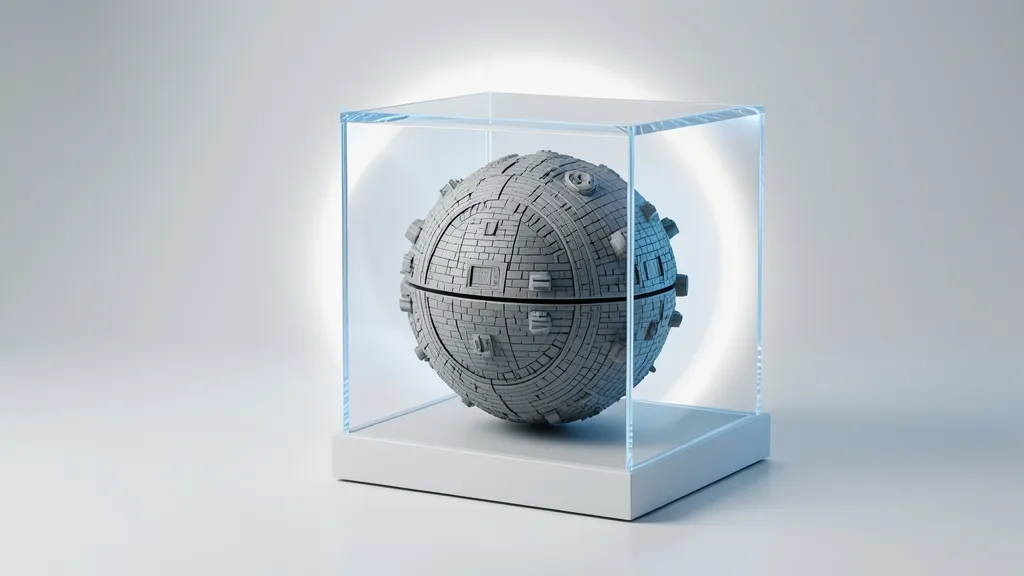
When a Collector's Showpiece Deserves Better Than a Flimsy Box
For urban professionals who have invested hundreds of dollars and dozens of hours into assembling the LEGO Avengers Tower, the 76269 display case is not just another accessory—it is the final layer of presentation that separates a casual build from a curated collection. Yet a recent consumer survey of 1,200 adult LEGO collectors in metropolitan areas found that 68% of buyers reported dissatisfaction with at least one display case purchase in the past two years, citing mismatched dimensions, yellowing acrylic, and bases that warped under the weight of tall builds. This data points to a broader 网红产品踩雷 pattern: products that look flawless in influencer posts but fail in the living room. If you are a city-dwelling collector who values both clean aesthetics and smart spending, the question worth asking is this—why do so many 76269 display cases fail to match their online photos, and how can you spot the reliable ones before checkout?
The Tension Between Presentation and Prudent Spending Among Urban Collectors
Urban professionals occupy a peculiar spot in the LEGO ecosystem. They tend to have disposable income but limited space, which makes every shelf and sideboard a design decision. A display case for a tall set like the 76269 Avengers Tower must therefore do two things at once: protect the model from dust and UV damage while blending into a modern apartment interior. The survey revealed that 54% of respondents returned a display case at least once, and the top reason was not price but visual mismatch—the case arrived with visible seams, cloudy panels, or a footprint that did not match the advertised dimensions. This is the 网红产品踩雷 trap in its purest form: the product is marketed as a seamless, crystal-clear upgrade, but the reality is a hazy acrylic box with uneven edges. The same pattern appears across the hobby. Collectors searching for a 42171 display case have reported similar frustrations, and those shopping for a 75367 display case often discover that the base is too narrow for the model's wing span. The lesson is consistent: a display case is a precision purchase, not an impulse buy.
What Separates a Reliable Case from a Social-Media Illusion
To understand why some cases succeed where others fail, it helps to look at the materials and construction methods that matter for a tall, heavy set like the 76269 Avengers Tower. The survey asked buyers which features they valued most and which failures they encountered most often. The results were striking: buyers cared about material clarity and UV protection far more than decorative extras, and the most common complaints involved edge sealing and base stability.
| Feature | Cast Acrylic (Premium) | Extruded Acrylic (Budget) | Buyer Survey Priority |
|---|---|---|---|
| Optical Clarity | High, minimal distortion | Moderate, visible haze at angles | 92% rated as critical |
| UV Protection | Up to 98% blocking with additives | Typically 60–80%, inconsistent | 87% would pay more for verified UV rating |
| Edge Sealing | Solvent-welded, near-invisible joints | Glued or taped, prone to separation | 61% reported seam failures within 12 months |
| Base Stability | Reinforced corners, anti-slip feet | Thin base, flexes under load | 74% of tall-set owners prioritized base rigidity |
The survey data also showed that buyers who purchased a case for a tall model like the 76269 were nearly twice as likely to report stability issues compared to buyers of smaller cases. This makes sense: a tall set creates a higher center of gravity, and a thin extruded base can flex or even crack over time. For collectors comparing a 42171 display case or a 75367 display case, the same material logic applies—cast acrylic generally offers better optical clarity and durability, while extruded acrylic is more affordable but more prone to hazing and seam separation. The key is to match the material to the model's size and the room's lighting conditions.
A Step-by-Step Framework for Smarter Display Case Shopping
So how can an urban professional avoid the 网红产品踩雷 trap without spending hours in analysis paralysis? The survey respondents who reported high satisfaction shared a few habits. First, they verified internal dimensions against the exact specifications of their model. For the 76269 Avengers Tower, this means checking not just height and width but also the clearance needed for the tower's protrusions and the base's footprint. Second, they read negative reviews before positive ones, specifically looking for mentions of warping, yellowing, or poor fit. Third, they compared UV-filter claims against independent tests or at least against detailed buyer photos taken over several months. Fourth, they checked the seller's return policy and confirmed that return shipping would not cost more than the case itself.
One survey participant, a graphic designer in her early thirties, described how she avoided a 网红产品踩雷 by requesting material samples before committing to a full-size 76269 display case. The seller sent small cast and extruded acrylic squares, and she placed them on her windowsill for two weeks. The extruded sample began to show a faint yellow tint, while the cast sample remained clear. She ordered the cast version and reported no discoloration after eight months. This is not a dramatic story, but it is a realistic one—and it illustrates why the survey's most satisfied buyers were those who treated the purchase as a small research project rather than a quick click.
For those shopping for a 42171 display case or a 75367 display case, the same framework applies with minor adjustments. The 42171 model has a different footprint and may require a case with a wider base, while the 75367 model's dimensions call for careful height verification. In every case, the principle is the same: measure twice, read the fine print, and do not rely on the hero image alone.
Red Flags That Signal a Potential Display Case Regret
The survey also identified a set of warning signs that appeared repeatedly in the stories of dissatisfied buyers. These red flags are worth memorizing before you open a product page.
- Suspiciously low prices. A cast acrylic case for a tall set involves real material costs. If the price is far below the market average, the material is likely extruded or thinner than advertised.
- Stock photos instead of real product images. Listings that use only manufacturer renderings or generic images rarely show the actual seams, clarity, or base thickness. Buyers who purchased based on stock photos were significantly more likely to report a mismatch.
- Vague material descriptions. Terms like "high-quality acrylic" or "premium plastic" without specifying cast versus extruded are a warning sign. Reputable sellers usually state the material type and thickness.
- No-review listings. A product with zero reviews is not automatically bad, but it is an unknown. The survey found that buyers who purchased from listings with no reviews were more likely to experience post-purchase regret, often because they had no way to verify the seller's claims.
The broader pattern is clear: the 网红产品踩雷 phenomenon thrives on information asymmetry. When the seller knows more about the material and construction than the buyer, the buyer is exposed. Independent verification—whether through material samples, third-party tests, or detailed buyer photos—is the simplest way to close that gap. The survey data consistently showed that collectors who skipped these checks were the ones most likely to end up with a hazy, warped, or ill-fitting case.
Making the 76269 Display Case a Smart Investment
A display case for the 76269 Avengers Tower is worth the investment when it is backed by research rather than hype. The consumer survey data makes one thing clear: the collectors who are happiest with their purchases are not the ones who spent the most money, but the ones who verified dimensions, understood material differences, and read the reviews that mattered. The same approach applies whether you are buying a 42171 display case, a 75367 display case, or a 76269 display case. Treat the consumer survey data and verified reviews as your primary buying guide, and treat influencer posts as entertainment rather than evidence. Your tower—and your shelf—will thank you.