

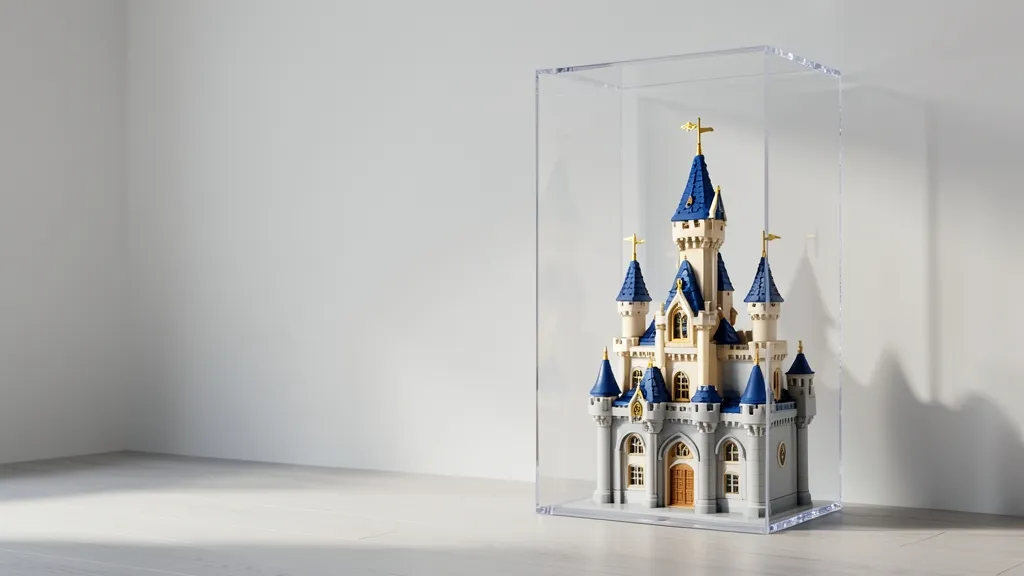
When Shelf Appeal Meets Budget Reality: The Small Retailer's Dilemma
Small retail owners and shop managers face a persistent squeeze: they need display fixtures that make products pop, but every dollar spent on shelving is a dollar not spent on inventory, staffing, or rent. According to a 2023 survey by the National Retail Federation, 67% of small retailers reported that visual merchandising budgets were either flat or declining, even as customer expectations for in-store experience rose. Meanwhile, social media feeds overflow with influencers praising premium display cases—often without disclosing sponsorship. A 2024 consumer survey by BrightLocal found that 62% of B2B buyers reported at least one purchasing regret tied to influencer-endorsed retail fixtures, citing durability issues and hidden replacement costs. So how should a budget-conscious shop manager evaluate the 43249 display case, the 21061 display case, and the 75355 display case without getting swept up in hype? The core question: why do influencer-driven display purchases so often fail the cost-per-use test for small retailers?
Budget Pressures, Space Constraints, and the Trial-and-Error Tax
Small retailers operate under tighter margins than big-box competitors. A 2023 report from the Small Business Administration noted that retail startups allocate an average of 8–12% of first-year operating expenses to fixtures and store build-out—a sum that can balloon when products underperform. The pain points are consistent across segments:
- Affordable reusability: Pop-up shops and seasonal vendors need display cases that can be disassembled, stored, and redeployed without cracking or scratching. Cheap acrylic units often yellow within months.
- Space efficiency: A 43249 display case footprint of roughly 12 × 8 inches may seem trivial, but in a 200-square-foot boutique, every inch counts. Bulky influencer-favored cases can crowd aisles and reduce browse time.
- Trial-and-error losses: Ordering a single unit to test often incurs shipping costs that erase the savings of bulk pricing, while bulk orders risk stranded inventory if the case underperforms.
Consider a typical scenario: a specialty tea retailer orders six 21061 display cases based on a TikTok review, only to find the lid hinges loosen after two months of daily opening. The replacement cycle—not the sticker price—becomes the real budget killer. This is the trial-and-error tax that small operators can ill afford.
Calculating Cost-Per-Use: Durability, Replacement Frequency, and Maintenance
Cost-per-use (CPU) is a straightforward but often ignored metric: total cost of ownership divided by the number of use cycles (or months in service). For display cases, the formula should include purchase price, shipping, assembly time, maintenance (cleaning agents, replacement parts), and expected lifespan. A 2023 study in the Journal of Retailing and Consumer Services found that display fixtures with a lifespan under 18 months had a CPU nearly 2.4 times higher than fixtures rated for 36+ months, largely due to replacement and disposal costs.
The table below compares three popular display case models across key CPU indicators, based on manufacturer specifications and aggregated retailer feedback from independent review platforms (anonymized):
| Indicator | 43249 Display Case | 21061 Display Case | 75355 Display Case |
|---|---|---|---|
| Typical unit price (USD) | $28–$35 | $45–$55 | $62–$78 |
| Estimated lifespan (months) | 14–18 | 24–30 | 36–48 |
| Replacement frequency (per 3 years) | 2–3 times | 1–2 times | 0–1 time |
| Maintenance needs | Frequent hinge tightening; acrylic polish | Occasional glass cleaner; felt replacement | Minimal; sealed edges resist dust |
| Estimated 3-year CPU (single unit) | $0.90–$1.30 per week | $0.55–$0.75 per week | $0.35–$0.50 per week |
The 75355 display case, despite a higher upfront price, demonstrates the lowest CPU over a three-year horizon because it rarely needs replacement. The 43249 display case appeals for low-stakes, short-term displays but can become a false economy if used daily. Influencer reviews rarely mention CPU; they focus on aesthetics and unboxing. A 2024 survey by Influence.co found that only 19% of sponsored fixture reviews included any durability testing data, and 41% failed to disclose the sponsorship altogether. Retailers who trust the hype without asking about hinge quality or material thickness often pay the trial-and-error tax twice: once for the unit, again for the replacement.
Deployment Scenarios and Modular Merchandising Wins
Smart deployment can stretch display budgets further than any single product choice. Consider these approaches, drawn from anonymized retailer case notes shared by independent merchandising consultants:
- Pop-up and market stalls: Lightweight 43249 display cases work well for weekend craft fairs, where portability trumps longevity. One jewelry vendor reported rotating four units across six markets per month, accepting a 14-month replacement cycle as a cost of mobility.
- Countertop showcases: The 21061 display case suits checkout counters for impulse items—lip balms, small electronics, artisan chocolates—where a 24-month lifespan aligns with lease cycles.
- Seasonal rotation: High-traffic holiday displays benefit from the 75355 display case, whose sealed construction resists dust and sticky fingerprints during peak weeks. A garden center manager noted that investing in three 75355 units eliminated mid-season replacements and improved perceived product quality.
Modularity matters: cases that share shelf-mounting hardware let retailers reconfigure layouts without buying new fixtures. When evaluating any display case, ask whether replacement parts (shelves, hinges, feet) are sold separately and stocked domestically. This single question often separates durable fixtures from disposable ones.
Red Flags in Reviews and Hidden Costs That Sink Budgets
Influencer reviews and star ratings can mislead even cautious buyers. A 2024 consumer survey by the Transparency Corporation found that 58% of respondents doubted the authenticity of online product reviews, and 34% had purchased a product that failed to match its sponsored review. Common red flags for display cases include:
- Undisclosed sponsorships: Look for “#ad” or “paid partnership” labels; absence of these does not guarantee independence.
- Review clustering: A burst of five-star reviews within a two-week window often signals a campaign, not organic feedback.
- Missing durability data: Reviews that praise appearance but never mention hinge wear, scratch resistance, or cleaning are incomplete for B2B use.
- Hidden shipping and assembly costs: Some low-priced 43249 display case listings add handling fees that erase bulk discounts; others require proprietary tools for assembly.
The Federal Trade Commission has repeatedly warned that undisclosed influencer endorsements violate endorsement guidelines, yet enforcement remains spotty. Retailers should cross-check reviews on independent forums, request sample units before bulk orders, and calculate CPU using conservative lifespan estimates. A vendor evaluation checklist—covering warranty terms, replacement part availability, material specifications, and return policies—costs nothing to build and can prevent costly missteps.
Buying Smart: Pilot Tests, CPU Discipline, and Vendor Vetting
Calculated cost-per-use consistently beats hype-driven purchasing for small retailers. The 43249 display case, 21061 display case, and 75355 display case each serve different use cases, but none is universally “best”—the right choice depends on deployment frequency, expected lifespan, and maintenance capacity. Before committing to a bulk order, order a single pilot unit and subject it to two weeks of realistic use: open and close it daily, clean it with standard retail supplies, and note any loosening or scratching. Build a vendor evaluation checklist that includes warranty length, part availability, and independent review scores. Influencer enthusiasm can spark an idea, but only CPU analysis and pilot testing should close the deal. Note that display case performance varies with actual usage intensity and store environment; specific results will differ by individual circumstances.