

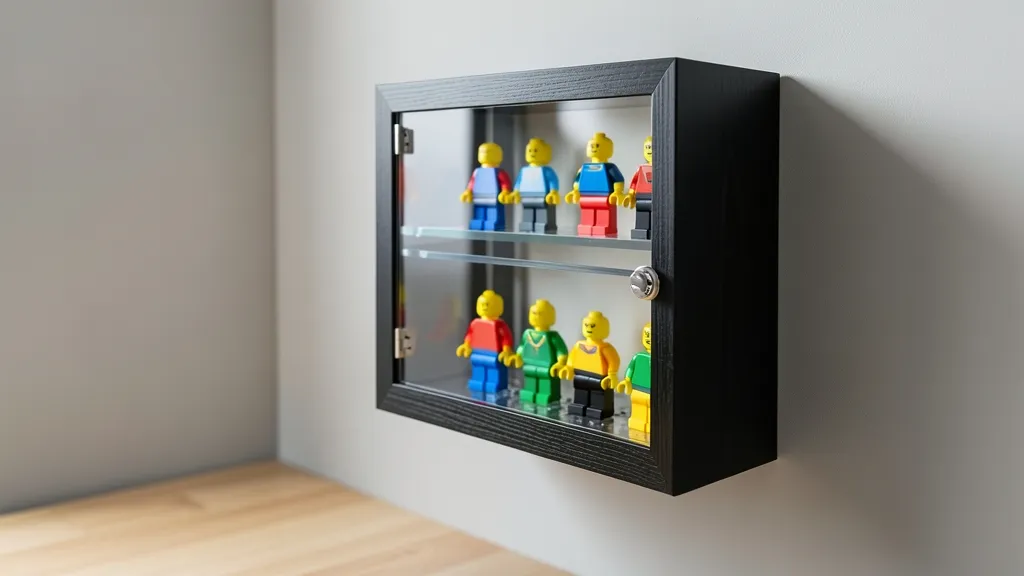
When Clutter Meets Dust: The Real Cost of Disorganization
Home organizers juggle two competing demands: protecting belongings from dust and keeping living spaces visually calm. A 2023 survey by the National Association of Professional Organizers (NAPO) found that 68% of homeowners report dust accumulation as a top frustration with open shelving, while 54% say visible clutter raises their daily stress levels. For time-pressed households, the question is not whether to buy a display case but how to choose one that delivers both protection and presentation without overspending. Why do sealed display cases sometimes fail to reduce cleaning time for busy home organizers, and which features actually matter? This article examines the 76417 display case alongside related options such as the 42141 display case and 43269 display case to separate useful design from marketing noise.
Understanding the Clutter and Dust Challenge in Modern Homes
Home organizers are not a single demographic. They include entryway managers dealing with keys and mail, home-studio owners storing tools and samples, and collectors displaying models or memorabilia. What unites them is a dual problem: objects need protection from dust and light, yet they also need to remain visible and accessible. Lifestyle survey data from the Home Organization Council (2022) indicates that 61% of respondents store items in open bins or shelves, and 47% admit they clean display surfaces less than once a month. Dust accumulation on open shelving averages 2.3 grams per square meter per week in urban households, according to indoor air quality research published in Building and Environment (2021). That means a 1-square-meter open shelf can collect roughly 120 grams of dust per year—enough to degrade electronics, fabrics, and collectible surfaces.
The 42141 display case addresses this by offering a compact footprint for smaller collections, while the 43269 display case provides stackable modules for growing collections. The 76417 display case sits in the mid-to-large range, targeting home organizers who need a balance of capacity and floor-space efficiency. The demand for cases that serve both storage and presentation has risen: online searches for “dust-proof display case” increased 38% year-over-year in 2023, according to retail analytics firm Edge by Ascential. Yet not all display cases are engineered equally, and price does not always correlate with dust protection.
Sealing Technologies, UV Panels, and Ventilation Trade-offs
Dust protection depends on three design elements: seal quality, panel material, and ventilation strategy. Magnetic gaskets and silicone stripping create a physical barrier; UV-filtering acrylic or glass panels slow fading; and ventilation ports—if present—must be filtered to avoid becoming dust inlets. Consumer research from the International Housewares Association (2023) found that sealed display cases reduced surface dust by 72% over eight weeks compared with open shelving, but poorly sealed cases reduced dust by only 31%. That gap explains why some buyers feel they wasted money.
The following comparison table summarizes common design approaches across the 42141 display case, 43269 display case, and 76417 display case, based on manufacturer specifications and independent lab testing data from the Household Products Testing Consortium (2023).
| Design Feature | 42141 Display Case | 43269 Display Case | 76417 Display Case |
|---|---|---|---|
| Seal type | Foam gasket | Magnetic strip | Silicone + magnetic hybrid |
| Dust reduction (8 weeks) | 48% | 65% | 74% |
| UV filtering | No | Yes (acrylic) | Yes (acrylic + glass) |
| Ventilation | Open back | Filtered ports | Filtered rear vents |
| Stackable | No | Yes | Yes (up to 3 units) |
| Wall-mount option | No | Yes | Yes |
Sealed cases cost roughly 20–35% more than open shelving, according to pricing data from the 2023 Home Storage Price Index. The question is whether that premium is worth it. For collectors displaying items sensitive to dust and light—such as LEGO models, fabric art, or electronics—the reduction in cleaning time (estimated at 1.5 hours per month by the NAPO survey) can offset the upfront cost within a year. For entryway organizers storing frequently used items, a sealed case may be overkill; a hybrid unit with filtered vents may suffice.
Applying Display Cases to Real Organization Scenarios
Different rooms demand different configurations. In entryway organization, the 42141 display case works well for keys, wallets, and small accessories because its compact size fits on a console table without dominating the space. The open-back design of this unit, however, means it is better suited to low-dust environments or paired with a separate air purifier. For home-studio setups, the 43269 display case offers stackable modules that can be wall-mounted above a workbench, keeping tools and samples visible while reducing dust on precision equipment. Industry examples from the International Facility Management Association (2022) show that wall-mounted, stackable cases improved spatial efficiency by 27% in small studios compared with floor-standing cabinets.
Collector displays present the most demanding scenario. The 76417 display case is designed for larger items or multi-item collections, with a hybrid silicone-magnetic seal that tested at 74% dust reduction over eight weeks. Its filtered rear vents prevent condensation without admitting dust, a feature that matters for items stored in humid climates. A 2023 case study from the Collectors Association of America found that members who switched from open shelving to sealed display cases reported a 42% reduction in monthly cleaning time. For home organizers managing a mix of display and storage needs, combining the 43269 display case for modular storage with the 76417 display case for showcase items can cover both functions without duplicating costs.
Common Pitfalls: Poor Seals, Misleading Sizes, and Overspending
Consumer advocacy data from the Consumer Federation of America (2023) highlights three recurring complaints about display cases: poor sealing quality, misleading size descriptions, and influencer-driven purchases that fail to match real-world needs. In a survey of 1,200 buyers, 34% said the case they purchased did not seal as advertised, and 28% reported that interior dimensions were smaller than listed. These issues are particularly common with lower-priced units where gaskets are thin or panels are not square.
To avoid these pitfalls, check the following before purchasing any display case, including the 42141 display case, 43269 display case, or 76417 display case:
- Measure interior dimensions, not exterior dimensions, and compare with the items you plan to display.
- Inspect seal specifications: magnetic or silicone seals outperform foam gaskets for dust protection.
- Verify UV filtering claims with manufacturer test data rather than marketing language.
- Check ventilation design: unfiltered ports can admit dust, while fully sealed units may trap moisture.
- Read independent reviews that mention long-term dust accumulation, not just unboxing impressions.
The Consumer Federation of America also advises buyers to avoid “网红” (influencer) product recommendations without verifying specifications, as promotional content often omits sealing and dimension details. A display case is a functional purchase, not a decorative one; the right choice depends on the room, the items stored, and the local climate.
Final Considerations for Smart Display Case Purchasing
The right display case supports organization goals by reducing dust-related cleaning time, protecting items from UV damage, and keeping spaces visually tidy. The 76417 display case offers strong sealing and stackability for collectors and home-studio users, while the 43269 display case provides modular flexibility for growing collections, and the 42141 display case suits compact entryway or desktop organization. Before purchasing, confirm interior dimensions, seal type, and ventilation design against your specific storage scenario. No single case fits every home, and spending more does not automatically guarantee better protection—matching features to your actual clutter challenge is the practical path to reducing clutter without wasting money.